Real Instagram Followers vs Fake: What the Word "Real" Is Actually Worth
The fake-follower check you are looking for is already in your account and needs no third-party tool. Then there is the harder question: a third of the follower services sold here call themselves real, and on every seller we can measure, those are the ones least likely to come with a refill.
 Michael Chen
Almost every English search on this subject is a search for a tool. Checker, check free, check app, remover. The useful answer is that the best checker is not a tool at all, it is a panel inside your own account, and unlike the third-party ones it does not want your login.
So this post does two things. It shows you the check. Then it looks at what happens on the other side of the transaction, using what can be measured on a marketplace that lists this stuff, because the vocabulary sellers use turns out to be less informative than it looks.
The check: three readings in your own audience panel
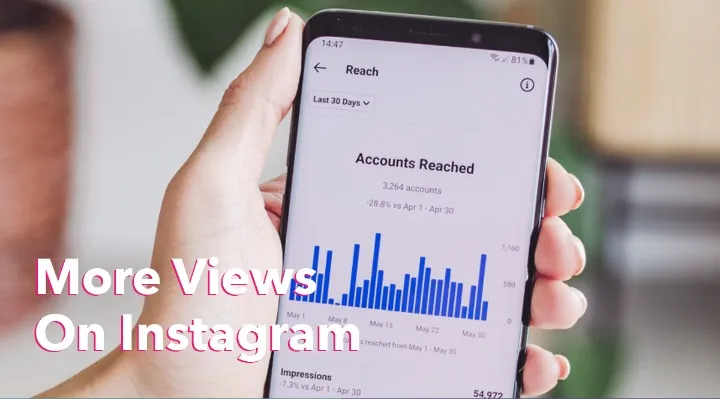
Switch the account to a professional one, which is free and does not touch your posts or your followers, and the audience section opens up. Three readings live there, and none of them can be bought.
| What you can see | Can a seller fabricate it | Why |
|---|---|---|
| Follower total | Entirely | Adding to the number is the whole product |
| Likes on a post | Entirely, and cheaper | Same mechanism, smaller order |
| Engagement ratio | Can be propped up | A small amount of genuine interaction makes the ratio presentable |
| Country and language split | Effectively not | A supplier delivers from whatever regions its stock sits in |
| Follower active hours | Not, because it follows from the split | Wrong countries means wrong time zones |
The last two rows are the check. If your content is in one language and your three largest follower countries have no connection to it, you have your explanation, and you did not need a tool to find it. If the panel is still empty, that is not a fault; it fills in once the account is past a small audience.
There is a second failure this reading catches, and it is the one nobody warns you about because no money changed hands. A post travels, three hundred people from somewhere unrelated follow overnight, and those accounts are real. They belong to real people. For a page written in a language they do not read they behave exactly like bots: numbers in the denominator that never respond. Real and useful are separate properties, and only the second one matters to you.
The symptom that shows up first
Follower count climbing while story views stay flat or fall is the earliest visible sign, and it has a mechanical cause rather than a mysterious one. The people who arrived are asleep when you post.
The knock-on effect is worse than the flat number. The follower-active-hours chart is computed across your whole audience, so once a large group from the wrong time zones is inside it, the peak it draws is not your real readers' peak. Schedule against that chart and every adjustment makes things slightly worse while looking data-driven. If your audience is genuinely split across time zones, the posting-time guide covers what to do instead of averaging the two peaks.
What "real" is worth, measured on a live catalogue
Here is where a marketplace can say something a blog usually cannot. Across 1,396 live Instagram follower services listed here on 31 August 2026, 466 of them, a third, put the word "real" in the service name.
Against price, the word predicts nothing. Split by seller so that one large catalogue cannot dominate the average, the "real" services come out cheaper than that seller's own follower median about as often as they come out dearer. There is no direction to report, so none is reported.
Against the guarantee, the word predicts something, and it points the wrong way. On all seven sellers with enough of these services to compare, the "real" ones carry a refill guarantee less often than that same seller's ordinary follower stock. On one seller it is two per cent against nine. On another, twenty-three against forty-two. The direction is the same on every one of the seven.
That is worth sitting with. The adjective that is supposed to signal quality travels with a weaker commitment to replace what drops off. Which makes sense once you say it plainly: the guarantee costs the seller money and the adjective does not.
Refill is the exception, not the default
"Refill meaning" and "no refill meaning" are both live English searches, so it is worth being direct. A refill means the seller tops the count back up if it falls within an agreed window. No refill means the drop is yours.
Across the whole Instagram follower catalogue here, refill is on 23.2 per cent of services. Drip-feed, which spreads delivery over time rather than landing it all at once, is on 28.7 per cent. Cancel is on 53.7 per cent. And the refill share is under half on every individual seller, so this is not one cheap catalogue dragging the average down. It is the shape of the market.
The practical reading: if a listing does not say refill, assume there is none, and treat a drop as the expected outcome rather than a fault. That is the single term most worth reading before you compare anything else. The Instagram growth listings here come from several independent suppliers and show refill, drip-feed and cancel per service, so the comparison is on the page rather than in the marketing. Growth services for other platforms follow the same layout.
The other way people buy an audience, and its price ladder
Buying an account that already has followers is a different transaction from buying followers for the account you have. The first swaps your identity; the second leaves ownership alone but changes your composition.
On the accounts side the interesting thing is scarcity. Of 2,129 live Instagram account listings, only 39 state a follower count at all, and those sit at roughly twenty times the shelf's median price. An audience is genuinely the expensive attribute.
But look at how it is priced. On the two sellers that run a full ladder, the cost per follower falls as the count rises. One seller's twenty-five thousand account works out at roughly a third of the per-follower cost of its own thousand-follower account. The other seller's ten thousand is roughly a quarter of its five hundred. Two independent sellers, the same direction.
An audience that got more valuable as it grew would price the other way round. Falling unit cost with volume is what a commodity does when it is bulked, and that is a fair description of what is in those listings. If you go this route, the thing that decides whether the account is actually yours is not the follower number: it is whether the recovery mailbox, the phone binding and the two-factor secret came with it. The account listings state those separately, and the selection guide goes through what to read first.
What buyers here actually order
One more first-party number, because it corrects a common assumption. Across 1,109 completed order lines on Instagram growth services on this site, followers account for about half the orders and roughly three quarters of the money spent. View services account for a far larger raw volume and a small share of the spend.
So the market's own behaviour agrees with the argument: followers are the thing people pay for, which is exactly why the terms attached to them deserve more reading than they get.
If you have already bought
- Measure the damage before you touch anything. Open the audience panel and see whether the imbalance is a few percentage points or most of the account. A few points is not worth acting on.
- Stop buying. This is the only step that has to happen immediately, because a cleanup followed by the same acquisition habit lands you back here in a season.
- Change what you schedule against. Drop the follower-active-hours chart and use the per-post performance of your own recent content instead. The chart is the polluted reading.
- Consider a cleanup last. It has costs and rate limits of its own; the removal guide covers them, and the ghost-follower guide covers the difference between an inactive real person and a bot, which is not the same cleanup.
The last point is the one worth keeping. Your composition is visible to anyone you approach for work, because a serious partner asks for the audience panel and not the follower count. That makes this less a matter of self-respect than of the thing most people were buying followers to reach in the first place.