Buying Instagram Post Shares: One Word, Six Products, and a Price That Is Not What It Looks Like
Before you compare two share listings you need to know that the word covers at least six different things, that the price on the card is a rate per thousand, and that seventeen of these listings sell you exactly one placement. All three are checkable on the shelf itself.
 Sarah Johnson
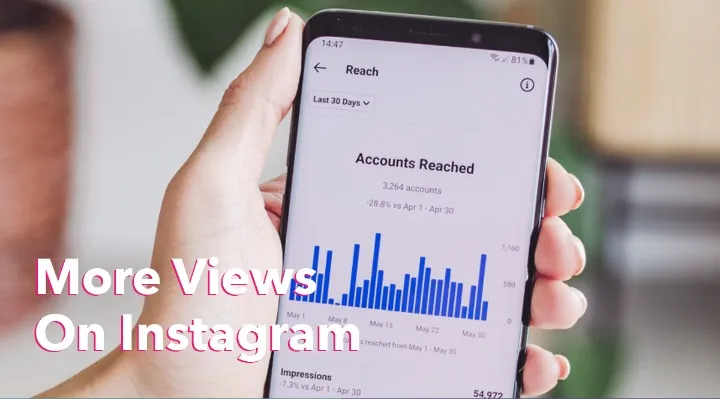
Start with a check you can run in ten seconds, because it reframes the whole purchase. Open somebody else's post, any post, and look for a share count. There is not one. The share figure exists only inside the insights on your own posts, so the number you are thinking about buying is invisible to every visitor who lands on the post.
That does not make it worthless. It does mean the case for buying it cannot be the case people usually make, which is that a high number persuades the next viewer. Nobody else can see it.
What follows is what is actually for sale, measured on this marketplace on 1 September 2026, under the storefront's own visibility rule: active, not blacklisted, from a seller who is still listed.
One word, and at least six different products behind it
Of the 4,453 live Instagram growth listings here, 146 put a share or a repost in the name. Those 146 are not variations on one service. Reading every title, they sort into groups that overlap but do very different things.
- Post shares, 89 listings. The send count on a feed post or a Reel.
- Story shares, 65 listings. Your post reposted into somebody's story, which is a different surface with a different audience.
- Reposts, 38 listings. The post appearing on another account.
- From a named or verified profile, 20 listings. Sold by the identity of the account doing the sharing, sometimes by handle, sometimes as a count of verified profiles or influencers.
- Bundled with other metrics, 19 listings. Shares arriving alongside reach, impressions, engagement or link taps in one order.
- With a direct message attached, 14 listings. Your post shared and then sent into inboxes, usually to a list you supply.
The last group is the one worth pausing on. A listing reading "Post/Story/Profile Share + Direct Message [MULTI HASHTAG LIKER]" is a messaging campaign against a scraped list. It is filed under the same word as a send count, and it is not remotely the same purchase.
The tab on the shelf shows about a quarter of the stock
Growth listings here carry a structured metric label that drives the left-hand navigation. On the Instagram shelf that label reads Shares on 37 listings. All 37 are inside the 146, so where the label exists it is right. It simply has not been applied to the rest: the field is missing entirely on 2,779 of the 4,453 live Instagram listings.
So the practical instruction is to search the shelf for the word rather than clicking the metric tab, because the tab will hide four listings in five from you, including most of the story-share and repost stock.
The number on the card is a rate per thousand
Every growth listing on this site is priced per thousand units. The charge is the rate multiplied by your quantity and divided by a thousand, which is how the checkout computes it. For an order of five thousand shares that is intuitive enough.
It stops being intuitive on seventeen of these 146 listings, because they set both a minimum and a maximum of one. Those are the single-placement products: a story share from one verified profile, from four, from fifty, from a hundred influencers, or from two specific named handles whose follower counts are printed in the title. You buy exactly one, and the charge is a thousandth of the figure printed on the card.
Two consequences. Sorting a share search by price ascending mixes bulk-rate listings with single-placement listings, and the ordering it produces is meaningless. And a single-placement row that looks wildly expensive next to a bulk row is not expensive at all; it is quoted in a different denomination. Check the minimum and the maximum before you compare anything.
What these listings commit to, which is not much
Refill, the promise to top the count back up if it falls, appears on 14 of the 146. That figure is worth splitting by seller rather than reading as a shelf rate, because it is not a shelf rate at all. One seller carries 12 of the 14, on 36 share listings. Two others carry one each. The remaining six sellers, holding 94 listings between them including the two largest share catalogues at 46 and 40, offer it on nothing.
Which turns the question around. There is no point asking whether a share listing has drop protection as if the answer varies by product. On this metric it varies by seller, and six of the nine sellers have simply never offered it.
Almost nobody here buys them
Real sales, taken from completed orders rather than from any listing's own counter: across every Instagram share and repost service this catalogue has ever carried, live or since delisted, there have been 46 completed order lines totalling 15,707 units. Instagram growth services overall have taken 1,107 completed lines.
So this is roughly one order line in twenty-four, on a metric that has more listings than saves, mentions or profile visits. Plenty of supply, almost no demand. That gap is the most honest thing on this page: the people who buy growth services on this site, in volume, every day, are not buying this.
Getting them without paying, which is the same problem as making a good post
A send happens when one person decides another specific person should see the thing. That is a higher bar than a like and a much narrower one, because it needs the viewer to have somebody in mind.
Posts that clear it tend to do one of three jobs. They say something a group already believes, precisely enough to be forwarded as evidence. They carry information the recipient would otherwise have to look up. Or they are funny in a way that is about the sender as much as the subject. Writing an explicit ask into the caption works on the margin, but only where one of those three is already true; asking people to send a post they had no reason to send does nothing.
The reason this section is short is that there is no measurement behind a longer one. Nobody outside your account can see your share count, including us, so nobody can tell you what lifts it except by generalising from posts you cannot inspect.
If you are going to buy anyway, in order
- Decide which of the six products you want. A send count on a feed post and a story repost from a named account are different purchases with different evidence behind them.
- Search the shelf for the word rather than filtering by the Shares tab, or you will see 37 listings out of 146.
- Read the minimum and the maximum before the price. A listing capped at one unit is quoted per thousand like everything else and is not comparable to a bulk row.
- Check who the seller is rather than what the listing promises, because drop protection on this metric belongs to one seller out of nine.
- Buy the smallest order the listing allows, on a post you already care about, and read the result in that post's own insights, which is the only place the number exists.
The listings themselves sit on the Instagram growth shelf, from several independent suppliers, with the declared flags visible on each card, and the other platforms follow the same layout. If you want the wider view first, the platform comparison covers what drop protection costs across the whole catalogue, and the likes guide covers the signal this one sits next to.